

Supreme doesn't fight its resale market. It feeds it. Most premium brands are still running the opposite playbook, at significant cost to themselves
Issue #4 · The streetwear brand that built a billion-dollar business by treating resale as a marketing channel

Most premium retail CEOs I work with have a complicated relationship with resale. The general counsel is sending takedown notices to Vestiaire. The commercial director is annoyed that StockX prices their pieces above retail. Marketing wants the brand “controlled.” There is a quarterly meeting about it. Nothing changes.
The resale market is treated, almost universally in the premium segment, as a brand-control problem. It is a problem the brand cannot solve, fights anyway, and quietly resents.
I want to propose, gently, that the resale market is not a problem. It is the most accurate, most current, most unbought piece of brand intelligence available to a retailer in 2026. And the brands that built their entire business model around acknowledging this are the ones the next generation of customers grew up wearing.
Supreme noticed this twenty years before anyone else. They built the whole company around it.
What Supreme actually built
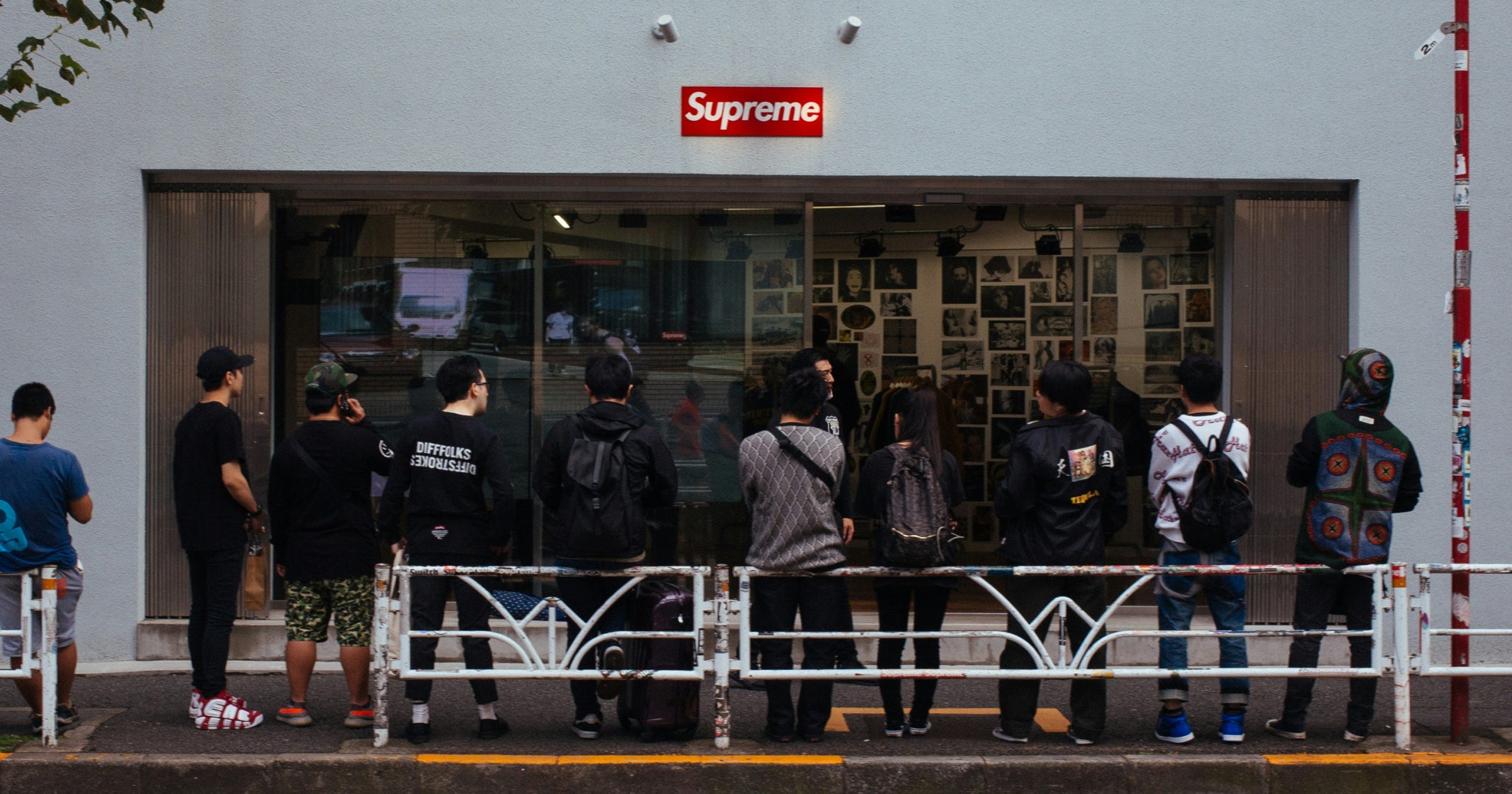
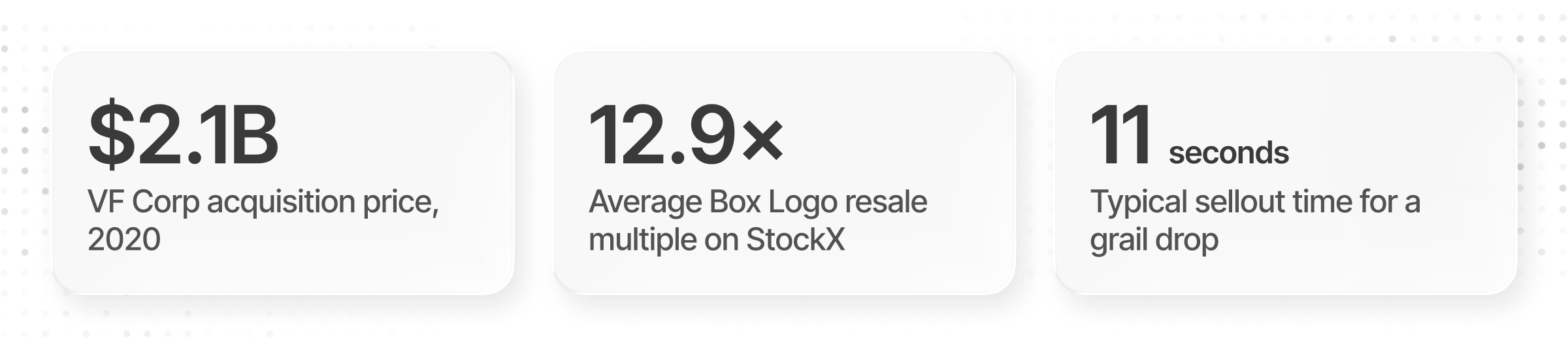
Supreme is, on the surface, a streetwear brand. T-shirts, hoodies, the red box logo on accessories. Founded in 1994 in a single store on Lafayette Street in New York. Acquired by VF Corporation in 2020 for $2.1 billion.
Underneath that surface is a customer acquisition system that almost no other retailer has copied successfully, partly because copying it requires giving up something most retailers are unwilling to give up: control.
The mechanism has three pieces.
The drop. A small number of items released at a fixed time, usually Thursday at 11am New York time. Production quantities are deliberately constrained to sell out within minutes. The brand never confirms quantities or restocks. A T-shirt that sold for $48 retail is unavailable by 11:04am.
The instant secondary market. Within an hour of the drop, the same T-shirt is on StockX, eBay, and Grailed at 2-5× retail. By the end of the week, the resale price has stabilised at a number the brand can read. Supreme has effectively run a real-time auction on every product without lifting a finger.
The next collaboration. Supreme’s collaborations, Louis Vuitton in 2017, The North Face perennially, Tiffany in 2021, are designed *with the secondary market in mind*. The most desired collaboration pieces are those the secondary market signals are most desired. The brand reads the resale market as a focus group that pays to participate.
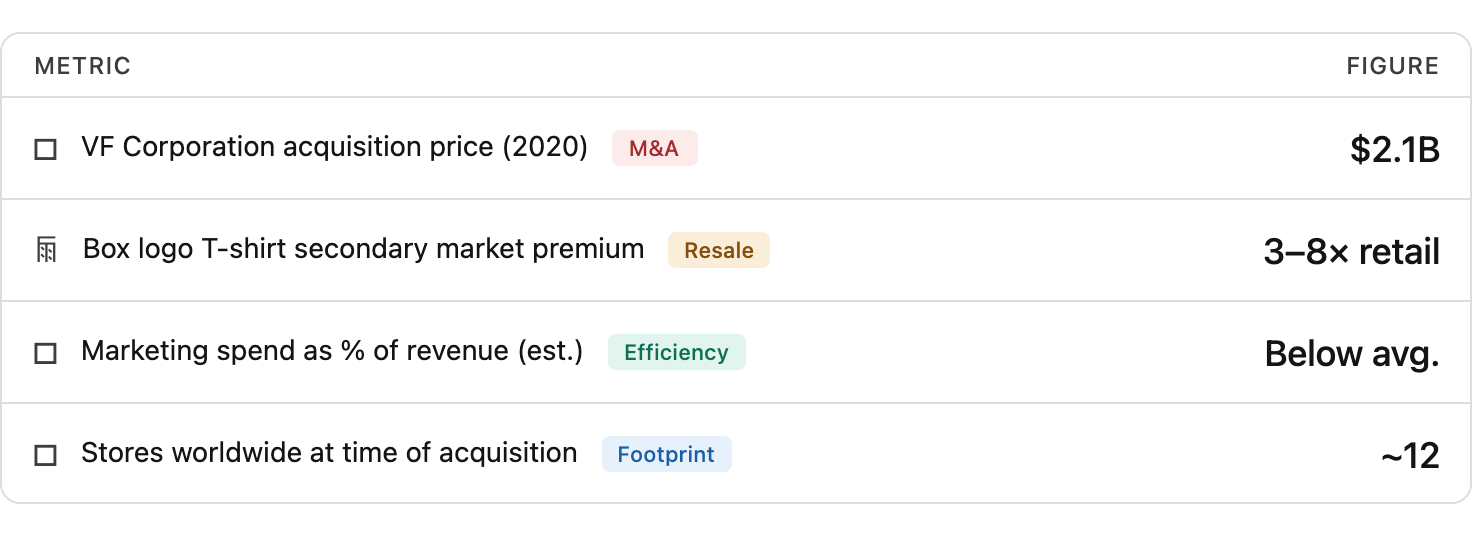
The VF Corporation acquisition price is the part the industry remembers. The interesting numbers are the other three. A twelve-store global footprint, marketing spend below industry average, and a secondary market that consistently prices the product at a multiple of retail. Supreme built a $2 billion business by outsourcing the marketing budget to the resale market.
This is the part most premium retailers have not absorbed.
Why this works, and why your legal team will misread it

The reflex, when a premium retailer looks at Supreme, is to write it off as a streetwear story. Different segment. Different customer. Doesn’t apply.
That reflex misses what the mechanism actually does. The streetwear context is incidental. The system underneath is general-purpose, and three other things are happening that translate directly to premium and luxury retail.
The resale market acts as continuous, free, real-time market research. Most retailers run customer surveys, focus groups, and sell-through reports to find out what their customers want. Supreme’s customers tell them every Thursday afternoon, by paying multiple times retail for the items they actually wanted. The signal is purer than any survey because it is paid in real money, by the actual customer, in the actual moment of decision. Premium retailers have access to the same signal. Most are too busy fighting it to read it.
Resale premiums function as advertising the brand does not pay for. A T-shirt that sold for $48 and is now $200 on StockX is a billboard. The customer who sees that price differential learns three things instantly: the brand is desired, the supply is constrained, and the next drop is something to pay attention to. Supreme spends a fraction of what a comparable apparel brand spends on advertising, because the resale market is doing the brand-building work in public. Premium brands could be receiving the same advertising. Most are paying lawyers to suppress it.
The drop creates artificial urgency without artificial pricing. Most luxury brands respond to slow seasons by quietly discounting through outlet networks, end-of-season sales, or wholesale unloading. Each of these decisions creates a long-term cost that is rarely measured. Supreme has solved this by making the unit of release small enough that demand always exceeds supply. They never need to discount, because they never produce more than will sell at full price within minutes. The premium retailers who run quarterly markdowns have built the opposite system.
The deeper diagnosis is the one most premium retailers will resist. The resale market is not your enemy. Your inventory planning system is.
Supreme’s drop model is the most efficient inventory planning system in apparel. It guarantees full-price sell-through. It refuses to over-produce. It treats each product as a bet that gets resolved in real time. Most premium retailers are still running planning systems built for a wholesale era that has been ending for a decade.
How to build a version of this in your business
You do not need to drop Thursday at 11am. You need to take one product line and make it small enough, fast enough, and tracked closely enough that the secondary market becomes a tool rather than an embarrassment.
1. Stop sending takedown notices to your secondary market.
Pull the Vestiaire and StockX data on your top fifty SKUs. Build a weekly dashboard. Send it to merchandising and marketing. The numbers should be on a wall in the office, not buried in a legal file. Within thirty days you will know which of your products are genuinely desired and which are merely well-distributed. Most retailers cannot tell the difference today.
2. Pick one product line and run it as a drop.
Not the whole catalogue. One line. Smaller production run than the demand signal suggests. Released on a known date, sold through digital and one or two stores only, never restocked. Track sell-through, secondary market price, and customer acquisition data against your normal seasonal product. Run it for two cycles. The numbers will tell you something your planning system has been hiding.
3. Use secondary market premiums in your sales conversations.
Train your SAs to know the current resale price of the top twenty pieces. The most powerful sentence in a luxury sale, when used appropriately, is *”the last one we did is trading at 2.4× retail at the moment.”* That is not vulgar. It is informational. The customer is making a decision about an asset, and you are giving them the asset’s current market price. Most luxury SAs are not allowed to talk this way. Most luxury customers wish they would.
4. Re-cost the markdown line in your P&L.
Almost every premium retailer has a markdown line in their P&L that is treated as the cost of doing business. It is not. It is the cost of a planning system that consistently produces more than the customer wants at full price. The Supreme model has eliminated that line entirely. The implied saving for a premium brand running a 30% off-price channel is the most ignored number in their accounts.
5. Stop trying to control resale. Start participating in it.
This is the hardest one. The brand-control instinct is deep, and it is reinforced by every general counsel, every PR agency, and every consultant who has ever sold a “brand integrity” deck. The instinct is wrong. The brands building enduring customer relationships in the next decade will be the ones that acknowledge their products are assets, the secondary market is a real market, and customers who buy on resale are still customers. The brands fighting that reality will continue to lose share to brands that don’t.
A soft version of this, one product line as a drop, a secondary market dashboard, a re-trained sales team; will tell you within ninety days whether your customers respond.
Most premium retailers are running a planning system built for a wholesale era. The resale market is showing them, in real time, what that system is costing them.
Almost none of them are looking.
Retail Ideas · One powerful retail tactic, every week. Written by Susan Jeffers.
— Susan
Reply and say hi. I read every one.